Independent Research
Abrahm Morgan
Skin Cancer Incidence & Sunscreen Regulation
A Comparative Analysis of the USA and Europe
The United States and Europe take fundamentally different approaches to sunscreen regulation — and the data suggests it may be costing lives. This research examines why, and what it means for public health.
Key Findings
The USA reports approximately twice the melanoma incidence rate of comparable European nations, adjusted for UV exposure levels.
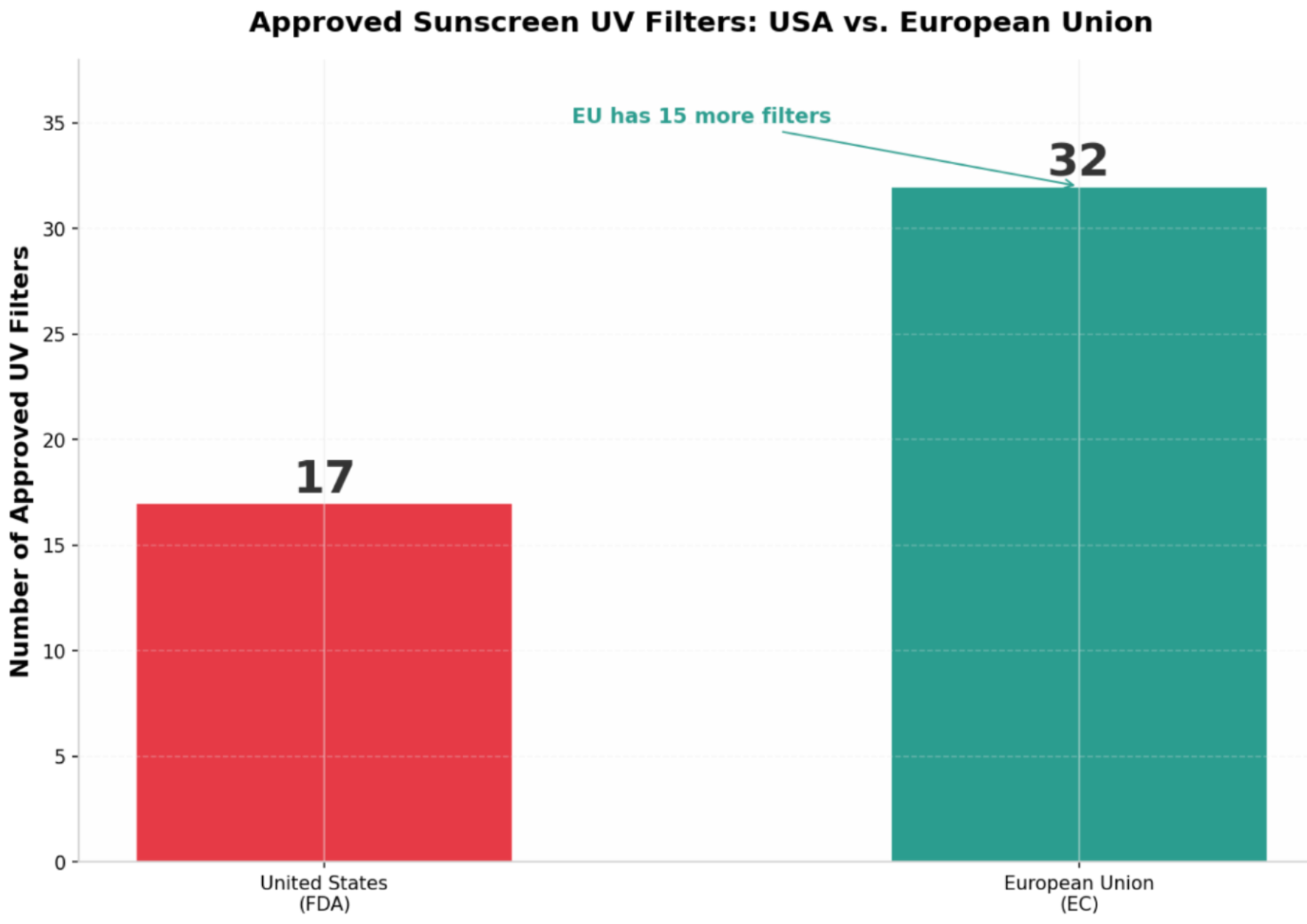
The FDA has approved only 8 active sunscreen ingredients, while European regulators have approved 28 — many with stronger UVA protection.
The last new sunscreen active ingredient was approved by the FDA in 1988, leaving American consumers with fewer protective options.
Research Overview
Why this comparison matters
Sunscreen is one of the most evidence-backed tools for reducing skin cancer risk — yet not all sunscreens are equal. The gap between US and European regulatory frameworks means that products widely available in Europe, offering broader-spectrum UV protection, remain unapproved in the United States. This research maps that regulatory divergence against real-world skin cancer data to understand the public health consequences.
"Regulatory decisions made decades ago continue to shape the sunscreen products available to Americans today."
The Research
Explore the full research
Dive into the data, methodology, and findings behind this comparative analysis.